Showing posts with label Musician. Show all posts

Thursday, January 12, 2023

Iconic rock guitarist Jeff Beck dead at 78

NEW YORK - Jeff Beck, the influential guitarist who rose to rock and roll stardom with 1960s supergroup the Yardbirds and later had a prolific solo career, has died, his official website said Wednesday. He was 78.

The eight-time Grammy award-winner, a guitar virtuoso and innovator who was also one of the world's great rhythm and blues interpreters, died "peacefully" after a sudden bout of bacterial meningitis.

"On behalf of his family, it is with deep and profound sadness that we share the news of Jeff Beck's passing. After suddenly contracting bacterial meningitis, he peacefully passed away yesterday," a statement on the English-born musician's website said.

"His family ask for privacy while they process this tremendous loss."

Beck's death quickly reverberated around the music world, with tributes pouring in from rock icons like Ozzy Osborne, with whom Beck once collaborated, and Kiss lead singer Gene Simmons, who called Beck's passing "heartbreaking."

"No one played guitar like Jeff," Simmons posted on Twitter. "Please get ahold of the first two Jeff Beck Group albums and behold greatness. RIP."

Musician Paul Young said he was "devastated" to hear the news.

"He was loved by everyone in the know," Young tweeted, calling Beck "the guitarists' guitarist."

Beck had already done pioneering rock recordings by the time he was hired by the Yardbirds in 1965 immediately after the departure of one of the band's star guitarists, Eric Clapton.

Beck helped propel the British avant-garde rock sound with multiple groundbreaking recordings, including the fuzz-filled guitar licks on "Heart Full of Soul."

By 1966 he was paired in the Yardbirds with fellow guitar wizard Jimmy Page, who went on to found the British blues rock sensation Led Zeppelin.

A year later Beck formed his own band, the Jeff Beck Group, which swiftly drew widespread praise. 

In 2015 Rolling Stone magazine placed Beck at number five in its list of the 100 greatest guitarists of all time.

Agence France-Presse

Wednesday, August 5, 2020

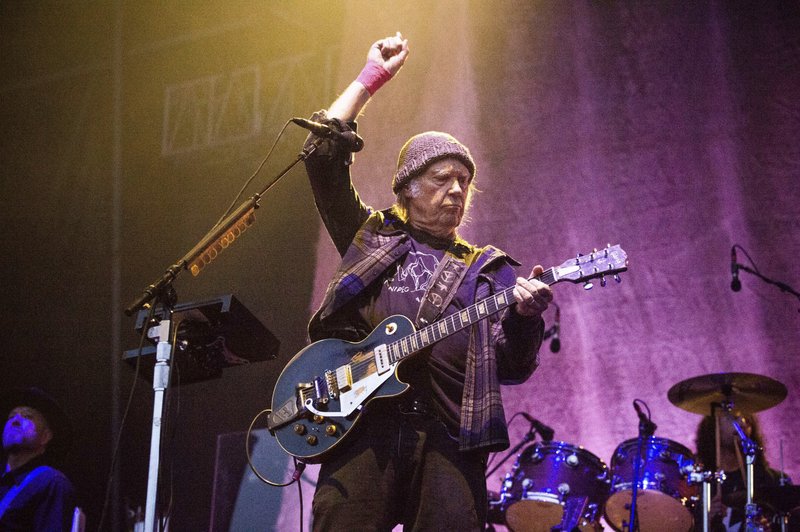
Neil Young sues Trump campaign, deriding use of famous tunes


NEW YORK (AP) — Neil Young sued President Donald Trump’s reelection campaign Tuesday for copyright infringement, saying he doesn’t want his music used as a theme song for a “divisive un-American campaign of ignorance and hate.”

The Grammy-award winning Canadian-born musician filed the lawsuit through his lawyers in Manhattan federal court, seeking up to $150,000 in statutory damages for each infringement.

A message seeking comment was left with a campaign spokesperson.

The legendary singer cited repeated use of two songs: “Rockin’ in the Free World” and “Devil’s Sidewalk.”

The campaign has used the tunes numerous times at rallies and political events, including on June 20 in Tulsa, Oklahoma, the lawsuit said.

Young said he was not suing to “disrespect the rights and opinions of American citizens, who are free to support the candidate of their choosing,” the lawsuit said.

“However,” it added, “Plaintiff in good conscience cannot allow his music to be used as a ‘theme song’ for a divisive, un-American campaign of ignorance and hate.”

Young first complained about the use of the 1990 single, “Rockin’ in the Free World,” in June 2015, when the song accompanied Trump’s announcement of his presidential campaign, according to the lawsuit.

The campaign’s insistence in a statement then that it had obtained permission to use the music only proved that it was aware it needed permission, the lawsuit said.

It said Young has voiced continuous and public objections to the use of the music.

“The campaign has willfully ignored Plaintiff’s telling it not to play the Songs and willfully proceeded to play the Songs despite its lack of a license,” according to the lawsuit.

New York attorney Ivan Saperstein, who filed the lawsuit on Young’s behalf along with attorney Robert S. Besser of Santa Monica, California, declined comment.

On July 3, Young lodged a complaint on the “Neil Young Archives” website, where a copy of Tuesday’s lawsuit was also posted, after Trump visited Mount Rushmore for an event.

“I stand in solidarity with the Lakota Sioux & this is NOT ok with me,” he said in support of over 100 protesters who forced the closing of a road leading to the landmark.

He complained after “Like a Hurricane” and other songs were played when Trump visited the site.

“Imagine what it feels like to hear ‘Rockin’ in the Free World’ after this President speaks, like it is his theme song,” Young said on the website. “I did not write it for that.”

Other artists have also complained after their songs were played at Trump’s events.

In June, the Rolling Stones threatened to sue after the 1969 classic “You Can’t Always Get What You Want” was played at Trump’s Oklahoma rally, where critics said the indoor event threatened to spread the coronavirus.

The family of the late rock musician Tom Petty said it had issued a cease-and-desist order after Trump used the song “I Won’t Back Down″ in Tulsa.

“Trump was in no way authorized to use this song to further a campaign that leaves too many Americans and common sense behind,″ the statement said.

Associated Press
___

Associated Press Writer Jonathan Lemire contributed to this story.

Monday, October 2, 2017

Tom Petty, heartland rocker with dark streak, dead at 66


NEW YORK—Tom Petty, the heartland rocker whose classic melodies but dark storytelling created a string of hits over four decades, died Monday of cardiac arrest, his family said. He was 66.

His family confirmed that Petty passed away Monday evening surrounded by loved ones after a confusing day in which several media outlets reported and then retracted premature news of his death.

“On behalf of the Tom Petty family we are devastated to announce the untimely death of our father, husband, brother, leader and friend Tom Petty,” a family statement said.

Petty early Monday suffered cardiac arrest at his home in Malibu, just a week after he closed his career in a triumphant fashion.

The rocker had played three sold-out shows at the iconic Hollywood Bowl to wrap up a tour celebrating 40 years of his band the Heartbreakers.


He closed the encore with one of his earliest and best-known songs — “American Girl,” which tells of an ambitious girl “raised on promises” now contemplating suicide, set to guitar harmonies from the golden age of rock ‘n’ roll.

The song was one of many by Petty about struggling to overcome long odds. “I Won’t Back Down,” perhaps his best-known song, took on a second life as a US patriotic anthem after the September 11, 2001 attacks.

The singer and guitarist — recognizable for his shoulder-length blonde hair — delivered his vocals in short punches that let on an underlying anger, such as on “You Don’t Know How It Feels.”

The rocker’s characters — small-town Americans full of aspirations but running into a wall of setbacks — reflected the hardscrabble early life of Petty.

His grandfather was a logger from Georgia rumored to have fled south to Florida after axing a man to death in an argument. Petty was born in Gainesville, the university town in northern Florida, to a belligerently drunk father who sold wholesale tobacco and candy.

Petty once recalled that his father, intoxicated and unimpressed by his son’s passion for music, once smashed up the boy’s record collection.

The future rocker said he told him, “Dad, if you’ll just leave me alone, I’ll be a millionaire by the time I’m 35.” It was a prediction that proved prophetic.

Rock as early escape

Petty, speaking in 2015 to Men’s Journal, credited his mother Kitty with saving him by making sure “to show us there was more to life than rednecks.”

“She read to me a lot. And she liked music: She had a record player and would play Nat King Cole and the ‘West Side Story’ soundtrack. I think of her every time I hear those songs,” he said.

But he remained consumed by inner rage.

“Any authority I didn’t agree with could just make me go crazy,” he said of his early life haunted by his father.

He struggled with depression most of his life and formed an addiction to heroin, although later in his life his only vice was marijuana and he instead embraced transcendental meditation to calm himself.

Petty embraced the country influences of the South, especially when he crafted the 1985 concept album “Southern Accents.”

Touring the United States, he flew a Confederate flag on stage — a decision he later regretted, telling Rolling Stone that “people just need to think about how it looks to a black person” as he likened the
controversial symbol to a Nazi swastika.

In a speech in February as he was presented a lifetime award at the Grammys, Petty said he owed a debt to African Americans such as Chuck Berry whom he credited as the creators of rock ‘n’ roll.

But like so many music fans of his generation, he discovered rock ‘n’ roll via Britain when he saw The Beatles perform on “The Ed Sullivan Show” in 1964.

“I had my eyes opened like so many others and I joined the conspiracy to put black music on the popular white radio,” Petty said.

Campaigner for artists

Petty in the late 1980s joined one of The Beatles, George Harrison, in a supergroup, the Traveling Wilburys, that also featured Bob Dylan. The project was short-lived after the death of another member, Roy Orbison.

Fresh from the glory of the Wilburys, Petty — long backed by the Heartbreakers — in 1989 released his first solo album, “Full Moon Fever,” which featured the wistful “Free Fallin'” and “Runnin’ Down a Dream” as well as “I Won’t Back Down.”

Other major hits by Petty included “Don’t Come Around Here No More,” written with David A. Stewart of New Wave duo The Eurythmics. The track’s playful video, themed around “Alice in Wonderland,” cemented Petty’s reputation as a favorite among stoners.

The three-time Grammy winner was steadfast on artistic control and had a reputation for battling with the music industry — most memorably with the 1981 album “Hard Promises” after he was angered by his label’s plan to put the store price higher than usual.

More recently, English singer Sam Smith agreed to credit Petty as a songwriter on his worldwide hit ballad “Stay With Me” due to the similarities — coincidental, by all accounts — in the chorus to worldwide hit “I Won’t Back Down.”

Agence France-Presse

Monday, October 28, 2013

Celebrities react on Twitter to Lou Reed’s death


LOS ANGELES – With just one Top 20 hit in a 40-year career, Lou Reed was still one of the most influential rock ‘n’ roll artists of all time when judged by the impact he had on other musicians and entertainers.

Reaction on Twitter was swift on Sunday when news broke that the 71-year-old died of an ailment following a liver transplant this year. Here’s a sampling of celebrity tweets:

— “Mr. LOU REED had himself a dream: Velvet the underground & change the music scene. Now he’s up & gone away. #RIP Lou Reed, an un-Perfect Day.” – Filmmaker Kevin Smith.

— “New York lost one of our greatest gifts today.”  - Def Jam co-founder Russell Simmons.

— “A musician, artist and trailblazer who played by his own rules.” – Paul Stanley of KISS.

— “One of the greatest artists of our time.” – Comedian Ricky Gervais.

— “RIP Lou Reed. Thank you for your beautiful/dark lyrics/music and stance on life. You inspired me from my teenage years right up till today.” –  Nikki Sixx of Motley Crue.

— “Rest in peace. Music lives forever.” –  Rapper LL Cool J.

— “R.I.P Lou Reed – VU was a big influence when weezer was being formed.” –  Weezer’s official Twitter page.

— “Cool cat. Hey babe take a walk on the wild side. Encouraging words for a young Virginia.” – Actress Virginia Madsen.

— “‘Where was I when I heard Lou Reed died? A pumpkin patch in Moorpark. A pumpkin patch. In Moorpark.’ – me, to my grandchildren” – Actor-comedian Patton Oswalt.

— “I met Lou Reed and told him he gave me tinnitus at a concert in 1989 that never went away and it was worth it. Dirty Blvd. Love to Lou.” – Filmmaker Judd Apatow.

— “The great & amazing Lou Reed has died my condolences 2 his wife Laurie Anderson.Lou was1of a kind & this colored girl still says dededede…” –  Actress Whoopi Goldberg.

— “Very sad to hear the news of Lou Reed’s passing. Another rocknroll legend has left us mere mortals behind. Thanks for the inspiration, Lou.” –  ”Glee” star Darren Criss.

— “My intro to Lou Reed/Velvet Underground was Janes Addiction cover of ‘Rock n Roll’. He was a singular, unique talent. RIP Lou and thanks.” –  Tom Morello of Rage Against the Machine and Audioslave.

— “One of a kind magic street soul,who created a future and history. I’m sad.” –  Actress/musician Juliette Lewis.

— “Lou Reed, my friend, a genius who transcended Rock. My condolences to his family. A poet 1st, he performed like a hit-man on a mission.” –  Comedian Richard Lewis.

— “R.I.P. Lou Reed. Just met at the GQ Awards. The music of my generation. Still Relevant!” — Actor Samuel L. Jackson.

— “Lou Reed RIP – always inspired by him – terrible news – only knew him through his art -a great – a singular poet -” – Actor John Cusack.

source: entertainment.inquirer.net

Saturday, December 8, 2012

Weiland fired by Stone Temple Pilots says Slash


Scott Weiland has been fired by Stone Temple Pilots, Slash says.

And the guitarist believes that’s the reason the singer is talking up a potential Velvet Revolver reunion.

Weiland went back to STP in 2008 after being dismissed by Slash, Duff McKagan, Matt Sorum and Dave Kushner, who cited “erratic behaviour” for the move.

The band have since auditioned a number of replacements but never settled on any of them.

Earlier this year VR staged a reunion charity show for the family of a close friend, leading Weiland to later claim they’d started writing new material. Hearing the news, Slash said: “He’s out of his mind.”

Asked by radio station 93X why Weiland recently said the time was right to get back with VR, the guitarist explains: “That’s because he got fired from STP.”

He continues: “these things always catch me by surprise too – I always find out about it through the media and I’m on the road in another country. I start hearing all this stuff and then I inquire within, and that’s what I was told.”

Meanwhile, Slash is happy with his solo career and his collaboration with singer Myles Kennedy. “I don’t compare anybody,” says the former Guns n’Roses man. “But we have a lot of similarities because we’re both guitar players. On top of that he’s a brilliant singer. His personality is very laid back and he’s a very hard worker. He just never ceases to amaze me.”

source: classicrockmagazine.com

Friday, September 28, 2012

Lord family warn over t-shirt scam


The family of late Deep Purple keyboardist Jon Lord have warned fans against buying a memorial t-shirt – because it’s fake.


The respected musician died suddenly in July as a result of complications from his cancer battle. He was 71.

Since then, his loved ones say they’ve heard reports of a pirated garment featuring the 70s-era Deep Purple logo and a recent picture of Lord.

A spokesman says: “Jon’s family have been informed that someone has been selling unofficial t-shirts at gigs and online, regarding Jon’s passing.

“They would like to make it very clear that his has nothing to do with the family or Deep Purple, and they are upset that anyone should profit from this tacky endeavour – unless the money is given to charity, which seems very unlikely.

“They ask that you respect their feelings and not encourage this behaviour.”

The Lord family recently thanked fans for their support following his death, saying: “We have been amazed and overwhelmed by it all. It will continue to be a comfort to us that his music moved so many people across the world.”

Purple singer Ian Gillan paid tribute to his former colleague, who retired from the band in 2002, saying: “If there was such a thing as a typical English gentleman in rock music, it was Jon Lord. We’ve all been touched by him one way or another. I could speak for hours about what he’s given us. We shall carry his memory forward, and his music.”


The family recently agreed to proceed with the release of Lord’s new interpretation of his Concerto for Group and Orchestra, which was finished days before his death and features the last organ solo he ever played. It will be released on October 1.

A public memorial event is being planned for next year.

source: classicrockmagazine.com

Friday, September 21, 2012

Singer / singwriter Fiona Apple arrested - police mugshot revealed


Fiona Apple has been arrested in Texas for possession of drugs found by police in a routine search of her tour bus.

The singer-songwriter, who came back with her first album in seven years earlier this year, was caught in possession of hashish by police in Sierra Blanca, Texas.

TMZ reports that Apple is still being held in Hudspeth County Jail. Fellow musicians Willie Nelson, Snoop Dogg have both been arrested in Texas on similar charges in the past.

source: gigwise.com

Monday, July 2, 2012

Jimi Hendrix: "I Don't Want to Be a Clown Anymore"


This story is from the November 15th, 1969 issue of Rolling Stone.

Records, film, press and gossip are collectively ambitious in creating the image of a rock superstar. With Jimi Hendrix – as with Janis Joplin, Mick Jagger and Jim Morrison – mythology is particularly lavish.

Unfortunately, it is also often irreversible–even when it's ill-founded or after the performer himself has gone through changes.

Several weeks ago, Life magazine described Jimi as "a rock demigod" and devoted several color pages to kaleidoscopic projection of his face. Well, why not? The fisheye lens shot on his first album cover shows him in arrogant distortion: on the second album, he becomes Buddha. Lest anyone forget, Leacock-Pennebaker's Monterey Pop has immortalized his pyromaniacal affair with the guitar. Rock-media bedroom talk makes him King Stud of the groupies. Stories circulate that he is rude to audiences, stands up writers, hangs up photographers, that he doesn't talk.

What Jimi's really all about – and where his music is going – is an altogether different thing.

For most of the summer and early fall, Jimi rented a big Georgian-style home in Liberty, New York – one of Woodstock's verdant "suburbs" – for the purpose of housing an eclectic family of musicians: Black Memphis blues guitarists; "new music" and jazz avantgardists; "Experience" member Mitch Mitchell; and – closest to Jimi and most influential – Juma Lewis, a multi-talented ex-progressive jazzman who is now the leader of Woodstock's Aboriginal Music Society.

The hilltop compound – replete with wooded acreage and two horses – was intended for a peaceful, productive musical growth period. But hassles did come, sometimes sending Jimi off on sanity-preserving vacations in Algeria and Morocco: local police were anxious to nab "big-time hippies" on anything from dope to speeding; the house was often hectic with hangers-on; pressure mounted from Jimi's commercial reps to stay within the well-hyped image and not go too far afield experimentally.

But with it all, growth, exchange and – finally – unity was achieved among Jimi and the musicians, whose work-in-progress was evidenced in occasional public appearances in the New York area (at the Woodstock/Bethel Festival, Harlem's Apollo Theater, Greenwich Village's Salvation discotheque, and ABC's Dick Cavett show) and has been recorded for Reprise on an LP which will be released in January. The name of the album, Gypsies, Suns and Rainbows, epitomizes the new Hendrix feeling.

With close friends of Jimi, I drove up to Liberty on a quiet September weekend. The melange of musicians and girls had departed. In a few weeks, Jimi himself was to give up the house, woods and horses for less idyllic prospects: a Manhattan loft and a November hearing on the narcotics-possession charge he was slapped with in Toronto, May 3rd.

Photographs have a funny way of betraying his essentially fragile face and body. He is lean. Almost slight. Eating chocolate chip cookies on the living room couch in this big house – furnished straight and comfortable – he seems boyish and vulnerable.

He offers questions with an unjustified fear of his own articulateness that is charming – but occasionally painful. "Do you, uh – where do you live in the city?" "What kind of music do you li— would you care to listen to?" He is self-effacing almost to a fault: "Do you ever go to the Fillmore? No? – that was a silly question, sorry." "I'm sorry, am I mumbling? Tell me when I'm mumbling. Damn ... I always mumble."

It becomes uncomfortable, so one says: "Jimi, don't keep putting yourself down. There's everybody else to do that for you." He attaches to that statement, repeats it slowly, whips out the embossed Moroccan notebook in which he jots lyrics at all hours of day and night, and scribbles something down.

Fingering through his record collection (extensive and catholic; e.g., Marlene Dietrich, David Peel and the Lower East Side, Schoenberg, Wes Montgomery), he pulls out Blind Faith; Crosby, Stills and Nash; and John Wesley Harding. The Dylan plays first. Jimi's face lights: "I love Dylan. I only met him once, about three years ago, back at the Kettle of Fish [a folk-rock era hangout] on MacDougal Street. That was before I went to England. I think both of us were pretty drunk at the time, so he probably doesn't remember it."

In the middle of a track, Jimi gets up, plugs in his guitar, and – with eyes closed and his supple body curved gently over the instrument – pick up on "Frankie Lee and Judas Priest," riding the rest of the song home with a near-religious intensity.

He talks intently to Juma and his girl. He cherishes real friends and will do anything for them. They, in turn, feel protective toward him. "Poor Jimi," one says. "Everyone's trying to hold him up for something. Those busts ... Even the highway patrol exploits him. They know his car: they stop him on the road between New York and Woodstock and harass him. Then they have something to gloat about for the rest of the day. Once a cop stopped me on the highway and started bragging: 'Hey, I just stopped Jimi Hendrix for the second time today.'"

On the bookcase is a photograph of a Fifties Coasters-type R&B group: processed hair, metallic-threaded silk-lapel suits, shiny shoes. The thin kid on the far left in a high-conked pompadour, grinning over an electric guitar: is it – ? "That's okay," Jimi smiles at the impending laughter. "I don't try to cover up the past; I'm not ashamed of it." But he is genuinely humble about the present. For example, he'd been wanting for some time to jam with jazz and "new music" avantgardists, but worried that such musicians didn't take him seriously enough to ever consider playing with him. "Tell me, honestly," he asked a friend, "what do those guys think of me? Do they think I'm jiving?"

We are listening now to the tape of such a session, the previous night's jam: Jimi on electric guitar, avantgarde pianist Michael Ephron on clavichord, Juma on congas and flute. A beautiful fusion of disparate elements, disjunct and unified at alternating seconds. Now chaotic, now coming together. "Cosmic music," they call it. Ego-free music. Not the sort of stuff the waxlords make many bucks off. Not the kind of sound guaranteed to extend the popularity of a rock superstar.

"I don't want to be a clown anymore. I don't want to be a 'rock and roll star,'" Jimi says, emphatically. The forces of contention are never addressed but their pervasiveness has taken its toll on Jimi's stamina and peace of mind. Trying to remain a growing artist when a business empire has nuzzled you to its bosom takes a toughness, a shrewdness. For those who have a hardness of conviction but not of temperament it isn't a question of selling out but of dying, artistically and spiritually. Refusing to die yet ill-equipped to fight dirty, many sensitive but commercially-lionized artists withdrew. I watch Jimi quietly digging the pictures of faraway people and places in a book, The Epic of Man ("South America ... wow, that's a whole different world. Have you ever been there?") and I wonder just where he will be and what he will be doing five years from now.

We crowd into Jimi's metal-fleck silver Stingray ("I want to paint it over – maybe black") for a sunrise drive to the waterfalls. ("I wish I could bring my guitar – and plug it in down there.") The talk is of puppies, daybreak, other innocentia. We climb down the rocks to the icy brook, then suddenly discover the car keys are missing. Everyone shuffles through shoulder pouches and wallets. "Hey, don't worry," Jimi says. "They'll turn up. No use being hassled about it now." Jimi's taking pictures and writing poetry. "I want to write songs about tranquility, about beautiful things," he says.

Back at the house, he pads around, emptying ashtrays, putting things in order. "I'm like a clucking old grandmother," he smiles. "I've just gotta straighten things out a little." It's 7 a.m. and he has to be at the recording studio in Manhattan at 4 in the afternoon. Everyone's exhausted.

After a few hours of sleep, Jimi floats into the kitchen looking like a fuzzy lamb unmercifully awakened and underfed. He passes up the spread of eggs, pork chops, crescent rolls and tea; breakfast, instead, is a Theragran and a swig of tequila in milk. "Jimi, you never eat ..." Juma's girl worries aloud.

We pile into the car for the two-hour drive into Manhattan. Passing two Afro-haired guys in an Aston-Martin, Jimi turns and flashes a broad grin, extending his fingers in a peace salute. We turn up the radio on Stevie Wonder's "My Cherie Amour"; groove on Neil Diamond, Jackie deShannon, the Turtles. Everything is everything: We're playing with a puppy, grateful for clear skies, clear road, clear AM station. What more could a carload of travelers in an inconspicuous blue Avis ask?

We pull into a roadside stop. No giggly bell-bottomed young girls in sight, Jimi gets out and brings back chocolate milk and ice cream for everyone. Truckers pay no attention. Middle-aged couples glare disdainfully.

The talk is of the session. They'll record at a studio on West 44th Street, then go somewhere else to mix it – maybe Bell Sound of A&R – because Jimi says the recording studio they're going to "has bad equipment ... likes to take advantage of so-called longhair musicians."

Downtown traffic on the West Side highway is light at rush hour. The fortresses of upper Riverside Drive are handsome in the sun, but the air has lost its freshness. Getting off the highway at 45th Street, it's 4:45. The session, costing $200 an hour, was booked to begin at 4:00. But delay couldn't be helped; no hassle. A carful of teenagers alongside us has the radio turned up loud on "If Six Was Nine" – the cut being used as part of advertisment for Easy Rider. I ask Jimi if he's seen the film; he doesn't answer.

Turning around, I find him stretched out on the back seat, legs curled up embryonically, hands clasped under his cheek. Sleeping soundly.

article source: rollingstone.com

Sunday, February 26, 2012

Keith Richards, Eric Clapton, Buddy Guy and More Celebrate Hubert Sumlin in New York


Close to midnight last night at New York's Apollo Theater, Eric Clapton had just finished a thunderous take on classic blues number "Forty Four" when Keith Richards ambled onstage with no introduction. Wearing a dark blazer, long green scarf, fedora and a huge grin, he embraced Clapton and stood center stage to massive applause, delivering a smoky take on Wolf’s "Going Down Slow," a chronicle of a frail man who has savored life’s greatest pleasures. "Man, I've had things that kings and queens will never have," Richards growled. "In fact, they don't even know about them, let alone get ’em. And good times? Mmmm...." He hovered around Clapton and then stood sidestage by the piano while Clapton delivered a throaty verse and then weaved clean-toned solos with young Austin guitarist Gary Clark Jr.

There were many highlights at Howlin for Hubert – a tribute to guitarist Hubert Sumlin, who played in Howlin’ Wolf’s band for decades and passed away on December 4th due to heart failure – but that was the peak. It was Richards’ first major musical appearance since the Rolling Stones last toured five years ago, and he showed little rust. After "Going Down Slow," he sat down and played metallic 12-string slide while singing "Little Red Rooster," and then strapped on a Gibson electric guitar to sing and trade licks with Clapton on "Spoonful." "It’s good to be back," Richards said, peering up to the balcony before breaking into a cackle. "Goddamn, it’s good to be back."

The entire show, which featured all-stars including Buddy Guy, Billy Gibbons, Warren Haynes, Jimmie Vaughan, Derek Trucks, Doyle Bramhall II and Elvis Costello – plus overlooked legends like Wolf’s former bandmates, harmonica player James Cotton, guitarist Jody Williams and saxophonist Eddie Shaw – was one for the history books. The event originated while Sumlin was still alive as a celebration to mark his 80th birthday. It stayed that way; Guest after guest recounted Sumlin’s unfaltering positivity and passion for his instrument. At one point, Toni Ann Mamary, Sumlin’s longtime manager and companion, tearfully recalled Sumlin tellling her, "I’m gonna be there. I don’t care if I play – I’m going to be there." She added, "Can you feel him?"

The night began with a film featuring classic Sumlin performance footage and a recent interview with him, where Sumlin humorously described how he found his own piercing signature sound after Wolf strongly urged him to lose the guitar pick. The stage lights then revealed two massive portraits of Sumlin behind the stage. His sunburst Stratocaster sat on a stand at center stage, with his trademark feathered cap hanging off of it. Clapton emerged – with short, slicked-back hair and wearing a blazer – with Cotton, Sumlin’s old musical partner. Clapton kicked the night off howling an acoustic, stomping "Key to the Highway," complemented by Cotton’s razor-sharp harp fills....

source: http://www.rollingstone.com/music/news/keith-richards-eric-clapton-buddy-guy-and-more-celebrate-hubert-sumlin-in-new-york-20120225

Sunday, February 21, 2010

Life Story on Jimi Hendrix


Who was the greatest rock and roll guitarist ever? Always and forever the name of Jimi Hendrix will be nominated answering that question. A vastly talented musician and instrumental technician, the legendary Hendrix combined the Blues, Soul, R&B and Rock & Roll into an innovative and mold breaking style. Coupled with flamboyant stage antics and uncharted mixing arrangements, Hendrix became an international, Rock & Roll and pop culture star. Unable to read music, and largely self taught, Jimi became a virtuoso who could play, compose and introduce spell-binding magic that will rock in musical posterity. The life story on Jimi Hendrix played like the comet he was; flashing across the heavens, burning hot, intense and bright - attracting attention, adulation, curiosity, and then suddenly flaming out.

Johnny Allen Hendrix was born in 1942 in Seattle, Washington; the son of seventeen year old Lucille Jeter and Army soldier James Allen Hendrix. Jimi's early childhood was marked by poverty and personal tragedies. Of the five Hendrix siblings, three were given up to state custody due to physical disabilities and blindness. Jimi became a shy and reserved boy, isolated and withdrawn. But he loved music and would strum a broomstick as if it were a guitar.

When Jimi was 15 his mother died and he bounced between relatives for a time. The sensitive boy was deeply affected and carried within him a burden of sadness, abandonment and neglect. Sensing his son's detachment and loneliness, Jimi's father paid five bucks for a used acoustic guitar to replace a one-string ukulele Jimi had bonded with for a number of years. At age 17, with his talent blossoming, Jimi received his first electric guitar and thereafter the life story on Jimi Hendricks changed forever,

Jimi began his formal musical career playing with local Seattle area bands, some paying gigs, some not. He was fired more than once for over-the-top stage stunts, but his talent was without question and he played left-handed, behind his back and with his teeth.

Still in high school, Jimi was an indifferent student who curiously received an "F" in music. He was eventually expelled for attendance and discipline problems and soon found himself in minor trouble with the law. The solution; Hendrix was ordered to enlist in the Army. But he was a poor soldier and was discharged within a year.

After his Army stint, Hendrix went on the road playing small towns, honky-tonks, warm-up and background for larger, better known acts. Ever expanding, Jimi was soon playing with notable acts such as the Isley Brothers, Ike and Tina Turner and Little Richard.

With his star rising and reputation growing, he traveled to London where he was introduced to the British rock scene. With the help of a few English musical luminaries, Hendrix formed the Jimi Hendrix Experience, a band that would soon hit the top of the charts and play to sellout crowds. Their first album, Are You Experienced, became a mega-seller, second only to the Beatles epic Sgt. Peppers Lonely Hearts Club Band.

Back in the United States, The Experience, now a rock and roll wonder very much in demand, played the Monterey Pop Festival, Fillmore East, and headlined venues coast to coast. Hendrix's fame grew exponentially and in the "sex, drugs, and rock and roll", culture of the times, he was an accomplished practitioner, or if you like - victim.

Legal and personal entanglements mounted including a drug possession arrest and contractual disputes. During this time of high flying success and excess, The Experience broke up. Other notable musicians joined Jimi and as his schedule excelled and his popularity peaked, so did his use of drugs and alcohol, sometimes affecting his work on stage and in the studio.

Hendrix's signature performance was at the famous, iconic, epic, historically footnoted Woodstock Musical Festival in August of 1969. Jimi and his group played a two-hour set, climaxing in Hendrix's solo rendition of the Star Spangled Banner, which has become a representation and marquee of the turbulent times of the 1960's.

Hendrix played his last concert in the contiguous United States in August, 1970 at Seattle's Sick,s Stadium, blocks from his childhood home. He didn't like the area or his memories growing up and he cursed the rain and played badly. He left abruptly, did a show in Hawaii and returned to England. The next time he would be on American soil would be for his funeral. The life story on Jimi Hendrix was over.

Jimi died September 18, 1970 at the age of 27 in the London flat of friend Monika Danneman after drinking heavily and taking a handful of sleeping pills. His sudden, shocking demise engendered speculation and innuendo. Some rumors claimed suicide, others hinted at murder, still others espoused that he was not dead at all, that reports of his death were only a publicity stunt.

The life story on Jimi Hendrix will be memorialized every time one of his songs is played, replayed, copied, re-copied, stolen or new renditions attempted. There was only one Hendrix and though his legacy may be clouded by his risky, showman's lifestyle, he was truly a man for his times. After all, Jimi was one of the first black Rock and Rollers to capture a predominately white audience while incorporating, mixing, and modifying culturally identifiable genres of American Music and turning out his own unique sound.

Wendy Pan is an accomplished niche website developer and author. To learn more about life story on jimi hendrix [http://myrocklegends.info/life-story-on-jimi-hendrix/], please visit My Rock Legends [http://myrocklegends.info/] for current articles and discussions.