Showing posts with label Mobile Phones. Show all posts

Saturday, October 3, 2020

Google unveils new Pixel handsets with 5G wireless

Google on Wednesday unveiled two new smartphones with 5G wireless capability under its Pixel brand, which showcases the Android mobile system but has limited market share.

The new Pixel 5 will start at $699 (around P34,000) for United States customers and its reduced-price Pixel 4a with 5G at $499 (around P24,000), the California tech giant announced at a streamed event.

The phones will be available from Oct. 15 in the U.S. and other markets.

The new handsets are “packing more helpful Google features into phones backed by the power and speeds of 5G,” said Google vice president Brian Rakowski.

The announcement puts Google, for the moment, ahead of Apple in the 5G smartphone race, with a 5G iPhone widely expected to be unveiled in the coming weeks. It also positions Google with a competitively priced 5G device as consumers begin looking for upgrades.

Google’s Pixel handsets have won positive reviews for their powerful cameras and integrated artificial intelligence, but have failed to crack the top ranks of the smartphone market dominated by the likes of South Korea’s Samsung, Apple and China’s Huawei.


The Pixel devices nonetheless serve as a showcase for Google and Android, integrating hardware and software and the newest Google applications.

“Google has pivoted its Pixel line from competing at the highest price points to offering more value, but the competition has intensified in the mid-tier market as well,” said Avi Greengart of the consultancy Techsponential.

“That leaves the Pixel 5 again trying to differentiate itself on its camera and software.”

The launch comes with the global smartphone market struggling from the pandemic-induced economic crisis and with many consumers waiting for 5G devices.

Total smartphone sales were down 16% in the second quarter, according to research firm IDC, whose survey showed Huawei leading the market ahead of Samsung, Apple and Chinese firms Xiaomi and Oppo.

At Wednesday’s event, the company also announced a ramped-up version of its Google TV platform which competes against Roku and Amazon’s Fire TV.

“The new Google TV experience brings together movies, shows, live TV and more from across your apps and subscriptions and organizes them just for you,” said Google TV senior director Shalini Govilpai.

Also unveiled was a new Nest Audio smart speaker which is 75% louder and has 50% stronger bass than its original smart speaker with the Google Home brand, according to the company.

Agence France-Presse 

Monday, February 26, 2018

AI and 5G in focus at top mobile fair


Phone makers will seek to entice new buyers with better cameras and bigger screens at the world’s biggest mobile fair starting Monday in Spain after a year of flat smartphone sales.

But with no major innovations awaited in handsets, analysts expect the four-day Mobile World Congress in Barcelona to focus on new uses for artificial intelligence (AI) and the looming deployment of super-fast 5G wireless networks.

Smartphone giants Huawei, LG or HTC are not expected to launch a new flagship device at the annual show, so Samsung will have the opportunity to grab the spotlight when it unveils its S9 and S9+ phones on Sunday on the eve of the fair.

The teasers suggest major changes to the camera, which will reportedly allow for “super slow-motion” videos and a new camera lens that improves low-light photos: features some of its rivals already offer.

The camera “seems to have become a major source of differentiation for the latest generation of smartphones,” said mobile phone analyst Ben Wood of CCS Insight.

Samsung suffered a humiliating recall of its Galaxy Note 7 device in 2016 after several devices exploded but its Galaxy 8 smartphone was a consumer and critical success.

The company remained the world’s biggest seller of smartphones in 2017 with a 21.6 percent market share, up from 21.1 percent in the previous year, according to research firm IDC.

Apple, which as usual will not be present at the show, was the second biggest vendor at 14.7 percent.

‘Sea of sameness’

Overall global smartphone sales for 2017 were virtually flat — down 0.1 percent at 1.47 billion units — as phone makers struggled to come up with innovations that encourage customers to upgrade their devices.

“The sea of sameness continues to erode the impact that new models have on the market,” said Wood.

In addition to better cameras, phone makers will focus on introducing bigger screens in mid-market devices, not just flagship ones, to try to boost their sales said Ian Fogg, senior director of mobile and telecom at IHS Markit.

“They are all really struggling to find good differentiation points to drive that upgrade cycle. They are not just competing with each other, they are competing with the phone that consumers already own that they may consider good enough.”

The sector is hoping the introduction of blazing fast 5G mobile internet service — which is is about 1,000 times faster than the 4G widely available in the developed world — will trigger a wave of growth in equipment sales and mobile services.

The first deployment of 5G wireless networks, which are quick enough to download a full length film in less than a second, are expected in key markets like the United States, Japan and South Korea at the end of the year.

“We are in a phase of acceleration….as much for 5G as for artificial intelligence,” said Jacques Moulin, the director general of IDATE, a French think tank on the digital economy.

The tech industry in December agreed on most universal standards for 5G, clearing the way for future wireless connections to support functions such as driverless cars and traffic systems.

“We will hear much more pragmatic discussion around 5G, around commercial trials, around what initial 5G networks will deliver. It is transitioning 5G from a future technology that has many possibilities into more of a business as usual approach,” said Fogg. AB

source: technology.inquirer.net

Tuesday, October 18, 2016

Xiaomi hard at work creating own bendable smartphone


It’s been out for a while that phone manufacturers Lenovo, LG and Samsung are working on creating bendable mobile phones. It seems that Xiaomi is not one to be left behind as reports emerge that the company is hard at work on its own version of a bendable smartphone.

A few prototypes from the other manufacturers have already made their rounds at floor shows. Xiaomi’s device made its public debut over the internet through a 30-second video posted last week, reports The Verge.

The video, courtesy of Gizmodo China, did not show the phone being bent but rather a bent screen that’s very responsive to touch. The person doing the brief presentation navigated what appears to be an Android interface, showing that a bendable phone would not feel any different from a standard smartphone with a solid touchscreen.

No word has been released yet with regards to the phone’s specifications or release date, but it would seem that the next battlefield for smartphones has been decided.  Alfred Bayle

source: technology.inquirer.net

Sunday, April 24, 2016

Pope Francis tells teens ‘happiness not an app’


VATICAN CITY — Happiness is not an app you can download on your mobile phone, Pope Francis told thousands of teenagers on Sunday at a mass to mark a weekend dedicated to youth.

“Freedom is not always about doing what you want. In fact it is the gift of being able to choose the right way,” he said in a homily punctuated by regular bursts of applause from the crowd on a packed St Peter’s Square.

“Your happiness has no price. It cannot be bought and sold: it is not an application you download on a mobile phone. Even the latest version cannot help you to grow and become free in love.”

An estimated 70,000 teenagers were in Rome for a weekend of events to celebrate Francis’s Jubilee year dedicated to the theme of mercy.

In a surprise move on Saturday, the 79-year-old pontiff heard confessions from 16 of them and a video message from him was broadcast at a rock and rap concert in the Stadio Olimpico.

One of the teenagers chosen to confess to the leader of the world’s 1.2 billion Catholics said she had been trembling as she approached the chair on which the pope was sitting in St. Peter’s Square.

“But as soon as I sat down I had the feeling of being next to a normal person rather than the pope. Francis is really one of us,” Anna Taibi, 15, told La Repubblica newspaper.

The Sicilian teenager said she had been touched by Francis’s tenderness as he listened to her confession.

“I expected him to give me a penance … instead he absolved me and let me go.”

The importance of mobile phones to contemporary teenagers was also reflected in Francis’s message to the concert.

Clutching an iPhone, he told his audience that living without Jesus was like not having any signal. “Always be sure to go where there is a network: family, parish, school,” he said.

source: technology.inquirer.net

Wednesday, March 18, 2015

‘Super Mario,’ ‘Pokemon’ may soon be on smartphones


TOKYO, Japan — After years of scoffing at the threat from smartphones, Nintendo Co. is doing an about face and entering an alliance with Japanese mobile game company DeNA Co. to develop games for mobile devices.

The announcement Tuesday means that Nintendo’s trademark game characters such as Super Mario and Pokemon could finally feature on smartphones and tablets. Such characters have been fiercely protected by Nintendo, appearing only on Nintendo platforms such as the Wii home console and 3DS mobile machines.

Both sides said they will build a global membership service for various devices including personal computers, smartphones and Nintendo machines. The service is set to launch in the fall of 2015.

They said the mobile games won’t be mere adaptations of the games already out for the Nintendo machines but developed especially for the smartphone experience.

The alliance will be combining Nintendo’s intellectual property and game development skills with DeNA’s expertise in mobile games, the announcement said.

Under the alliance, Kyoto-based Nintendo will acquire about 15 million DeNA shares or a 10 percent stake. In return, DeNA will acquire about 1.759 million Nintendo shares, or 1.24 percent of the company. Both acquisitions are worth 22 billion yen ($182 million). The payment is due April 2, they said.

Nintendo has run into trouble in the past few years as people increasingly turned to mobile phones to play games and spend time on social networks. The company is expecting to turn a profit for the fiscal year ending later this month, a turnaround from red ink the previous year.

Tokyo-based DeNA, founded in 1999, has a reputation as an innovator and is one of the most successful of a new generation of Japanese technology companies. It develops and operates a broad range of mobile and online services including games and e-commerce.

source: technology.inquirer.net

Sunday, August 17, 2014

Mom creates phone-locking app to force kids to return parent’s calls


MANILA, Philippines—Is this an invasion of the kids’ privacy or a method of strict but good parenting?

A mother in the United States has developed a mobile application (app) that guarantees kids will answer their parents’ texts and calls. The app was launched on Saturday.

Ignore No More, an app developed by Sharon Standifird from Texas, enables parents to lock the phones of their children if they think they are ignoring their texts and calls.

Standifird revealed in a televised interview that the parents, through this app, can take away texting, calling, gaming, and internet-surfing from their kids.

In order to use the app, it must be installed first to the phones of both the parents and their children. Then, once installed, parents can open the app on their smartphone, and click the name of their child. Next, they will have to enter the unlock code twice and then click to lock their child’s phone.

The child’s phone will be locked and with a single tap, and a list of contacts approved by the parent will appear. The child should then call someone from the contact list in order to get the password that will unlock the phone.

The app will enable kids to call 911 and once installed, Ignore No More cannot be disabled.

Ignore No More is currently available for $1.99 to US citizens and will only operate on Android-supported phones. A version for iPhone is underway.

source: technology.inquirer.net

Tuesday, June 24, 2014

Take ultimate ‘groufie’ with newest smartphone


MANILA, Philippines – Take better selfies, or better yet, the ultimate group selfie — a “groufie” with the newest smartphone that will hit the market soon.

Huawei, a leading global information and communications technology (ICT) solutions provider, is set to officially launch the highly anticipated Huawei Ascend P7 at an event in Manila on July 1. The Philippine launch is part of Southeast Asia Ascend P7 rollout that kicked off at CommunicAsia 2014 in Singapore.

Building on the success of Huawei Ascend P6, the new 4G LTE-enabled smartphone redefines smartphone excellence with top-notch features, ultra-fast connectivity and easier navigation in a beautifully-crafted design that places it in a class of its own. With a 5-inch full high definition display, industry-leading 8MP front-facing and 13MP rear-facing cameras, and the latest intuitive Emotion UI 2.3, Huawei Ascend P7 will Make it Possible for people to express excellence with edge, anytime, anywhere.

Huawei redesigned Ascend P7 from the inside out, significantly improving the performance of the smartphone’s hardware and software to redefine user experience. At 6.5mm slim, Ascend P7 sets a new record as one of the slimmest 4G LTE smartphones in the market. Huawei also incorporated a perfect harmony of design influences from the West with attention to details from the East.

“Huawei’s relentless commitment to developing premium quality smartphones over the past three years has paid off. We are now ranked number three globally in terms of smartphone shipments, and our brand recognition is growing steadily in key regions such as Asia and Western Europe,” said, Richard Yu, CEO, Huawei Consumer Business Group. “The Huawei Ascend P7 once again challenges existing industry standards by redefining smartphone design, camera experience, and connectivity, to provide people with an unprecedented mobile experience.”

Redefining craftsmanship

Huawei Ascend P7 provides an edge with enhanced strength and durability against everyday use with Corning® Gorilla® Glass 3 front and rear covers. It stands out from the crowd with a sleek, sophisticated metallic appearance created by a seven-layered rear surface treatment with a refined “spin effect” micro–pattern design.

“Huawei Ascend P7 was inspired by the natural curves of a water droplet which instills the phone with a sense of natural purity, and also gives users a more comfortable grip,” said Joon Suh Kim, Mobile Device Vice President, Consumer Experience Design Center, Huawei Consumer BG. “It took us months of extensive design refinements to achieve this excellent balance of form and function.”

For intense visual clarity when viewing multimedia, Ascend P7 has a 5-inch FHD touchscreen display with 1920 x 1080 resolution, 445ppi and 16:9 aspect ratio. To suit any style, Ascend P7 is available in a range of fashionable colors including black, white, and pink.

Redefining camera experience

Huawei Ascend P7 gives users an edge in low-light settings with Sony’s 4th generation BSI sensor, Image Signal Processer (ISP), IMAGESmart 2.0 software and f/2.0 aperture on its 13 MP 5P non-spherical lens rear-facing camera to create unparalleled clear, rich pictures at night or indoors.

To capture spontaneous moments before they are gone, HUAWEI Ascend P7’s unique Ultra Snapshot function enables the user to be camera-ready 1.2 seconds after double-clicking the down volume button intuitively from a locked mode, instead of spending time trying to unlock the screen.

Take better selfies, or the ultimate group selfie — a “groufie” — with the leading 8MP 5P non-spherical lens front-facing camera that comes with a panorama function for panoramic selfie shooting, and 10 level auto-facial enhancement in beauty mode. Users can also take a selfie video with the 1080p HD video playback.  Huawei Ascend P7 ensures picture-perfect moments every time with innovative built-in mirror function and selfie preview window.

Add an extra dimension to photos with the “Voice Photo” function which takes photos accompanied by 10-second audio clips for users to upload photos with special audio expressions on a variety of social media platforms.

In addition to camera improvements, Huawei’s proprietary Image Signal Processor (ISP) allows the smartphone to control a whole range of functions that mimic those found in professional digital SLRs, including autofocus, white balance, and noise reduction for beautifully-optimized photos under any conditions. Users can also select the focus and exposure metering function with just one touch so the preferred focus and exposure position can be set to maximize image precision.

Redefining connectivity and battery performance

For people seeking even faster and seamless connectivity, Huawei Ascend P7 enables unlimited media viewing with ultra-fast 4G LTE speed and Huawei’s unique dual antenna design to improve signal reception. Ascend P7 also uses smart network switching technology that stabilizes the connection even during weak signal reception to minimize battery drainage.

Enjoy long-lasting continuous media viewing and data sharing thanks to the robust 2500 mAh lithium polymer battery and proprietary battery saving technology. In addition, the power saving management function enables users to switch off any applications running in the background which are consuming unnecessary power to save battery.

The super power-saving mode enables Ascend P7 to adopt the most suitable use of power when it is running on less than 10 percent of the total battery. When it is enabled, the screen will dim and only the basic functions of the phone will remain activated, including voice calls, contact page. It will also stretch the remaining 10 percent of battery power to last 24 hours on standby.

Redefining user experience

Huawei Ascend P7 gives smartphone newbies the edge of an expert with the latest version of the intuitive, easy-to-use interface, Emotion UI 2.3, providing customizable lock and home screens, with two enhanced UIs for effortless navigation. Easily personalize the smartphone management software, including a harassment filter, permission manager, network and notification management, and power saving modes.

source: technology.inquirer.net

Sunday, May 25, 2014

Forget apps, old-school mobiles ring in a comeback


PARIS – They fit in a pocket, have batteries that last all week and are almost indestructible: old-school Nokias, Ericssons and Motorolas are making a comeback as consumers tired of fragile and overly-wired smartphones go retro.

Forget apps, video calls and smiley faces, handsets like the Nokia 3310 or the Motorola StarTec 130 allows just basic text messaging and phone calls.

But demand for them is growing and some of these second-hand models are fetching prices as high as 1,000 euros a piece.

“Some people don’t blink at the prices, we have models at more than 1,000 euros. The high prices are due to the difficulty in finding those models, which were limited editions in their time,” said Djassem Haddad, who started the site vintagemobile.fr in 2009.

Haddad had been eyeing a niche market, but since last year, sales have taken off, he said.

Over the past two to three years, he has sold some 10,000 handsets, “with a real acceleration from the beginning of 2013.”

“The ageing population is looking for simpler phones, while other consumers want a second cheap phone,” he said.

Among the top-sellers on the website is the Nokia 8210, with a tiny monochrome screen and plastic buttons, at 59.99 euros.

Ironically, the trend is just starting as the telecommunications industry consigns such handsets to the recycling bins, hailing smartphones as the way ahead.

Finnish giant Nokia, which was undisputedly the biggest mobile phone company before the advent of Apple’s iPhone or Samsung’s Galaxy, offloaded its handset division to Microsoft this year after failing to catch the smartphone wave.

But it was probably also the supposedly irreversible switch towards smartphone that has given the old school phone an unexpected boost.

 ’Back to basics’

For Damien Douani, an expert on new technologies at FaDa agency, it is simply trendy now to be using the retro phone.

There is “a great sensation of finding an object that we knew during another era — a little like paying for vintage sneakers that we couldn’t afford when we were teenagers,” Douani told AFP.

There is also “a logic of counter-culture in reaction to the over-connectedness of today’s society, with disconnection being the current trend.”

“That includes the need to return to what is essential and a basic telephone that is used only for making phone calls and sending SMSes,” he added.

It is also about “being different. Today, everyone has a smartphone that looks just like another, while ten years ago, brands were much more creative.”

It is a mostly high-end clientele that is shopping at French online shop Lekki, which sells “a range of vintage, revamped mobile phones.”

“Too many online social networks and an excess of email and applications, have made us slaves to technology in our everyday life. But Lekki provides a solution, allowing a return to basic features and entertainments,” it said on its website.

A Motorola StarTac 130 — a model launched in 1998 — and repainted bright orange was recently offered for 180 euros, while an Ericsson A2628 with gold colored keys for 80 euros.

“We have two types of profiles: the 25 to 35 year-olds attracted by the retro and offbeat side of a telephone that is a little different, and those who are nostalgic for the phone that they used when they were younger,” said Maxime Chanson, who founded Lekki in 2010.

“Some use it to complement their smartphone, but others are going for the vintage, tired of the technology race between the phone makers.”

source: technology.inquirer.net

Tuesday, November 12, 2013

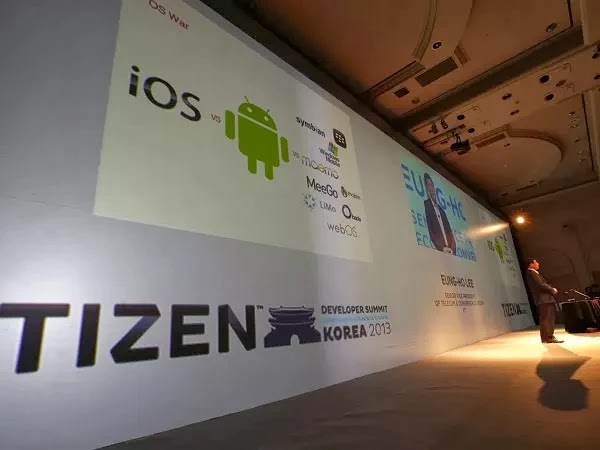
Samsung makes quiet push for new mobile OS


SEOUL, South Korea—Most mobile phone users have never heard of Tizen. Neither have car owners or anyone with a fridge.

Samsung Electronics Co. wants to change that.

The South Korean electronics giant is in a quiet push to make its Tizen operating system a part of the technology lexicon as familiar as Google’s Android or Apple’s iOS. Its ambition doesn’t stop there. Samsung sees the software in your car, fridge and television too.


The first developer conference in Asia for Tizen wrapped up Tuesday after a two-day run, bringing together app developers and Tizen backers from Samsung, Intel and mobile operators.

Samsung did not announce a Tizen phone, but it made a pitch for developers to create apps for the mobile operating system that is yet to be seen in the market. Samsung promised to give out $4 million cash to the creators of the best Tizen apps.

Samsung supplied about one third of the smartphones sold worldwide in the third quarter, nearly all of them running on Google’s Android. Its early bet on Google’s free-of-charge operating system served Samsung well and the company’s rise to top smartphone seller also helped Android become the most used mobile platform in the world. According to Localytics, 63 percent of all Android mobile devices in use are made by Samsung.

But while Samsung was wildly successful with selling its Galaxy phones and tablets, it had little success in locking Galaxy device users into music, messaging and other Samsung services. Google, however, benefited from more people using its search service, Google Play app and other Google mobile applications on Galaxy smartphones. Owners of Galaxy devices remain for the most part a slave to Google’s Android update schedule and its rules.

About nine in every 10 smartphone users are tied to either Google’s Android or Apple’s iPhone ecosystems, generating profit for Google and Apple every time they purchase a game or application on their smartphone.

That is partly why Samsung wants to expand its control beyond hardware to software, by building its own mobile operating system.

“With only hardware, its influence is limited,” said Kang Yeen-kyu, an associate research fellow at state-run Korea Information Society Development Institute. “Samsung’s goal is to establish an ecosystem centered on Samsung.”

The consolidation of global technology companies in the last few years reflects such trends. Apple has always made its own operating system for the iPhone. Google Inc. acquired Motorola Mobility in 2011 and Microsoft Corp. announced in September its plan to buy Nokia Corp., leaving Samsung the only major player in the smartphone market that does not make its own operating system.

Samsung executives told analysts last week that the company plans to beef up its software competitiveness through acquisitions and splashing cash on the development of mobile content and services.

But Tizen’s start appears bumpy. Samsung said earlier this year the first Tizen phone would hit the market this fall but it has not materialized. Samsung declined to comment on release schedules.

Even though Choi Jong-deok, Samsung’s executive vice president overseeing Tizen, said a launch of Tizen phone or televisions will happen “very shortly,” analysts said Samsung is unlikely to reveal the first Tizen device until February of next year, when the company said it will announce winners of its Tizen app contest.

During the developer conference, Samsung gave more clues about how its first Tizen device would look and revealed that it has recently launched a Tizen-based camera in South Korea.

Tizen would work across a vast range of consumer electronics made by Samsung, encompassing mobile devices, televisions, fridges as well as wearable devices. The mobile operating system will also work with automobiles. Samsung and Intel said Toyota Motor Corp. and Jaguar Land Rover are working together to bring Tizen OS to vehicles.

“You can build an application once and relatively easily move from device to device,” Mark Skarpness, director of systems engineering at Intel Corp., told the conference.

Samsung and Intel are also aiming to capture a bigger share of business in emerging markets where demand for cheaper smartphones is growing. Skarpness said future versions of Tizen will support lower-end phones, the same direction that Google is taking with its latest version of Android, KitKat.

“I got an impression that Tizen was benchmarking Android,” said Park Minhyung, a developer who attended the conference. “Speakers at the sessions said that they adopted strong features from Android. But with Android’s place well established in the market, I wonder how Tizen would undermine the front runner.”

source: technology.inquirer.net

Wednesday, October 16, 2013

Digital money transfers now easily tracked


SAN FRANCISCO—A leading digital money transfer provider is introducing a text update service to money transfer recipients in the Philippines so they are notified when their money is available.


Earlier this year, Xoom Corporation (NASDAQ: XOOM) launched StatusTrak (https://www.xoom.com/track-transfer), a tracking center that provides Xoom customers with a variety of ways to track their money transfers. These methods include e-mail updates, SMS text message updates and 24/7 online and phone support.

“When our customers send money, they want the peace of mind of knowing that their loved ones have received it—which is why we introduced StatusTrak,” says Julian King, Xoom’s senior vice president of marketing and corporate development.

“Now we can notify their family and friends who are receiving money in the Philippines, by texting them to let them know that the money is ready for pickup, delivery or on its way to their bank account. This new feature makes sending and receiving money more convenient for both the sender and recipient, which is very reassuring to our customers,” King adds.

The majority of remittances sent to the Philippines are picked up in cash by the receiving customer. In the past, the sender would have to relay the transaction number to the recipient before the money could be picked up. Now, with Xoom’s convenient tracking service, the sender no longer has to relay the transaction number and alert the recipient that money is available to them. Xoom can automatically send a free text to the recipient.

“According to a report by Business Monitor International (BMI), Filipinos use SMS texts to stay in touch with their loved ones back home, and the number of Filipino mobile phone subscribers has grown to more than 100 million people,” King saide. “The same report showed that Filipinos generate the largest SMS texts volume in the world, accounting for more than 10 percent of global SMS texts.”

source: technology.inquirer.net

Sunday, March 17, 2013

Apple Tells Us Why iPhone Is the Best After Galaxy S4 Launch


You've seen the specs: a 5-inch screen with 441 pixels per inch, 1080p display, a quad-core 1.9GHz processor and a 13-megapixel camera. Feature for feature, Samsung's next-generation Galaxy S4 has the iPhone beat.

But just two days after the S4's launch, Apple released a webpage explaining why its flagship smartphone is better than the competition.


"There's iPhone. And then there's everything else," the page's headline blares. Apple goes on to cite all the reasons why its phone is "unlike anything else," some of which are listed below:
  • The iPhone has received eight consecutive J.D. Power and Associates awards for customer satisfaction with consumer smartphones.
  • Only the iPhone and other Apple products have Retina display.
  • The iPhone has a long battery life — including up to eight hours of talk time — while maintaining a "thin and light design."
  • The iPhone has "ultrafast" wireless and LTE.
  • Only the iPhone and other Apple products have access to the iTunes Store and the App Store, which offers over 800,000 apps. What's more, they are all reviewed by Apple to protect against malware.
  • Only the iPhone has Siri, the intelligent personal assistant.
Check out the entire list, here.

source: mashable.com

Friday, June 15, 2012

Samsung, Apple get most smartphone profits–survey

NEW YORK – Samsung and Apple have captured more than half the global market for smartphones and over 90 percent of its profits, a research firm said Friday.

ABI Research said global smartphone shipments grew 41 percent year-over-year to 144.6 million in the first quarter of 2012.

Samsung and Apple accounted for 55 percent of smartphone shipments and more than 90 percent of the market’s profits, the report said.

ABI said Samsung delivered 43 million units in the quarter, to 35 million for Apple. Nokia was third with 11.9 million and BlackBerry maker Research in Motion just behind with 11.1 million.

Of the top 10 smartphone makers, only Samsung and Sony saw sequential growth from the fourth quarter, which is traditionally strong, the report said.

“Nokia witnessed a 40 percent sequential decline in shipments and may soon be passed by ailing RIM in shipments despite the BlackBerry maker’s 20 percent sequential drop.

Nokia recently began working with Microsoft on a Windows-based smartphone, dropping its own powered by Symbian.

“At this point in the year, Nokia will have to grow its Windows Phone business 5,000 percent in 2012 just to offset its declines in Symbian shipments,” says Michael Morgan, an ABI analyst.

The report said major markets like North America and Western Europe are nearing or passing the mark of 50 percent penetration for smartphones, meaning much of the growth will come from emerging markets like China, “which continues to show strong shipment growth of over 80,” ABI said.

A report last month by Gartner said 419.1 million mobile phones were bought worldwide during the quarter in a two percent decline from the same period a year earlier. It was the first quarterly decline since early in 2009.

source: technology.inquirer.net

Sunday, May 13, 2012

Fines For Texting While Walking In US Town


People caught texting on their mobile phones while walking face being fined by police in a US town.

The clampdown comes after a rise in the number of jaywalking incidents, where pedestrians cross roads illegally or recklessly, instead of using marked routes.

Officers in Fort Lee, New Jersey, have said some people are constantly putting themselves at risk of being hit by vehicles because they do not pay attention.

Police are stepping up patrols looking for "dangerous" walkers who are not obeying the rules of the road.

They have been handing out leaflets warning pedestrians about the crackdown.

So far this year, more than 20 people have been hit by cars in Fort Lee.

"It's a big distraction. Pedestrians aren't watching where they're going. They're not aware," said Fort Lee Police chief Thomas Ripoli at a news conference.

One resident Sue Choe admitted she texts and walks "all the time," but added: "When I walk, I still look around. I'm not constantly looking down."

In the last month-and-a-half, at least 117 tickets have been issued for jaywalking - an offence which carries a fine of $85 (£53).

source: http://news.sky.com/home/strange-news/article/16226688

Saturday, May 5, 2012

When fashion meets technology

MANILA, Philippines - The union of fashion and technology has always been met with skepticism (especially among tech critics), but the marriage of the two is a pretty logical one if you take a look at their similarities. For one, both fashion and technology work in feverish cycles in order to keep introducing newer and better objects of desire to the market. As such, both fields require highly creative and ingenious teams to keep up with these demands. To put together two leaders in the fields of fashion and technology would result in no less than a dream collaboration.

Having worked together for six years now, the Prada phone by LG 3.0 is quite a stunner. Officially launched in the US in February this year, it became available on the Philippine market a month ago. Enlisting no less than fashion darling Daria Werbowy and Academy Award nominee Edward Norton as endorsers, both Prada and LG are determined to make their collaboration a force to be reckoned with in the ever-competitive smartphone market.

While the fashion industry isn’t exactly known for being practical (heel-less heels, anyone), Prada challenged that notion with their third collaboration with LG. The phone is powered by a dual core 1.0 GHz processor which allows for blazing speeds with simple tasks, like switching between home screens and checking e-mail. However, the true test of a smartphone’s speed is on taxing tasks like watching HD videos and playing mobile apps, which, in this case, it passes with flying colors. One game of Temple Run and an HD trailer of the upcoming Avengers film quickly proved this point. At the moment, the Prada phone by LG 3.0 runs on Android’s Gingerbread operation system, which might disappoint a few technoholic fashionphiles (they might exist, you know), but a scheduled upgrade to Android’s Ice Cream Sandwich OS is in the works.

At the back of the phone is an 8.0 megapixel shooter capable of great photos and 1080p HD video at 30 frames per second — great for shooting the occasional home movie or for snapping artsy photos so you can upload them to Instagram (yes, Android users have finally been invited to the Instagram party).

All in all, the Prada phone by LG 3.0 is a very capable phone for the style-conscious, semi-power user. It can do almost everything most top-of-the-line smartphones can do, but does so with a flair that only the brand Prada can evoke.

source: philstar.com

Monday, March 19, 2012

Nokia makes bold moves to connect ‘the next billion’

MANILA, Philippines—The rapid increase in the sales of feature packed and high-priced smartphones may lead one to believe that the only type of phone that the world needs now is one that provides instant connection to social networking sites and the million or so applications, takes high resolution photos, on top of being able to call or text friends, family and colleagues.

But according to Finland’s cellular phone maker Nokia, one of the world’s largest handset manufacturers, there is still a significant portion of the global population that does not have a mobile phone, let alone one with gigabytes full of high-tech applications.

This is why Nokia has not forgotten this market and adopted a strategy to continue producing feature-packed phones—specifically the popular Series 40 phones that have just reached the 1.5 billion sales mark —at an affordable price point.

Nokia believes that tapping into this market will surely yield for the Finnish giant notable income growth in the years to come, while getting the “next billion” still without a mobile phone connected to the wired world.

In an e-mail interview with the Inquirer, Juha-Pekka Sipponen, head of products of Nokia’s Mobile Phones Unit, expounds on now Nokia is positioning itself to connect to future consumers under its “Next Billion” strategy and also arrest the decline in its share of the profitable and ultra-competitive mobile phone market.

Q: Can you expound on the “next billion’ strategy? How exactly does Nokia plan to connect the next generation of customers?

A: We want to create the best possible Internet experience for those either purchasing their first device or those that want to upgrade to better Internet connectivity.

No matter what our customers can afford, they expect a lot from their mobile phone. They have high demands for entertainment and seamless social contact. They want to learn new skills and improve their prospects for growth, both personally and to do better at their jobs. For many of our customers, their first interaction with the Internet comes through their mobile phone so it is a great responsibility we have to give the best experience. And it’s not just Internet, a Nokia mobile phone is often the primary (or only) music player, FM radio and camera.

We’re on a mission to make the Web truly worldwide! Doing good and unleashing opportunities by enabling people and societies to realize their potential. And for those areas without Internet access yet, we also provide information and services via products like Nokia Life Tools, which give access to healthcare information and banking services; they can learn new languages and find relevant market information for their business all via SMS.

Q: Why do you think the Series 40 devices have been able to strike a chord with customers? How do you explain their popularity and what were the specific game-changing models?

A: The Series 40 platform has contributed to making mobile technology accessible to the masses and continues to change peoples’ lives for the better. The 1.5 billion milestone is a sign of the enduring value that Series 40 phones offer to consumers and our developer partners. Through the years we’ve increased the utility of the phone by adding features and capabilities beyond calling and texting. Some of the more unusual innovations have happened because we’re careful to consider the environments that our phones are used in.

In some countries there can be frequent power outages so we have extended battery life and, in some cases, provide a flashlight on the phone. We have included rubber grips to phones sold in humid places and developed dust-proof keypads to maximize use in sandy environments. Our phones support over 80 languages and increasingly offer local services available via SMS or the Internet.

Q: How do you think the mobile phones over the next five years would look like? Will all phones be smartphones eventually?

A: It’s easy to think that all phones will be smart phones within five years but remember that there are billions of people in the world who don’t yet have any kind of mobile phone. Not everywhere is lucky enough to have affordable Internet access and the demands for mobile telephony vary almost as much as the personalities of our customers all over the world. We are very honored at Nokia to have played a part in connecting much of the world via mobile voice, text message and Internet but there is still much to do at every level of our offering and Series 40 is a big part of that.

Q: And assuming that the phones will be smartphones, how does Nokia plan to compete in this space considering the market leadership and popularity of the Apple and Samsung products?

A: Our introduction of the Lumia Windows Phone has received a hugely positive response from customers, developers and operators alike. Since mid-November, we’ve gone from zero markets to 15 markets, from zero devices to well over 1 million devices. From no presence in the US to being a lead in AT&T’s LTE launch. We’re delivering on our strategy as promised and beginning to see the fruits of those labors. However, smartphones are just part of our business and the new Asha family of phones is the latest innovation of the Series 40 platform. There are still huge opportunities for this platform and its popularity with consumers all over the world.

Q: Where in the world do you see Nokia getting additional customers? Will Asia remain the market to be in?

A: Asia is a hugely important market for us in all areas of our business. We’re seeing a great response to our new Asha devices. So much so that industry analysts have created a new category of phone to incorporate Asha’s innovations—‘Smartphone Lite’ is the name for new phones like Nokia Asha that blur the lines between feature and smart phones. Nokia Asha phones offer social media access, Internet browsing, games and apps, so the term ‘feature phone’ just doesn’t do them justice any more. Our customers in Asia are very demanding at every level so it’s great to see a positive response to Nokia Asha Series 40 devices.

Q: How would you describe the customer of today, and what are his or her quirks that are forcing telecommunications companies to adapt to quickly?

A: Our target consumers share a common trait of being very aspirational and concerned with style as well as technical quality. They want to be connected, and they have high expectations from their device, regardless of what they can afford to pay for it. Their needs and usage preferences vary and one size doesn’t fit all. How our consumers engage with apps is fascinating and we’re working very hard on making interaction with these services easier and cheaper where possible by simplifying (and often removing!) registration requests and offering try-before-you-buy opportunities on many apps.

Our customers are very savvy and know how to get the best out of their devices—we learn lots from them every day! Nokia is in a very fortunate position to be present in most markets, so the knowledge and insight we have into our customers’ desires and expectations is invaluable. Our customers are dynamic and it’s great fun to adapt with them.

source: http://technology.inquirer.net/9267/nokia-makes-bold-moves-to-connect-%E2%80%98the-next-billion%E2%80%99

Tuesday, March 6, 2012

Cellphone restrictions reduce deaths

SACRAMENTO, California (AP) — California's nearly four-year-old ban on drivers using handheld cellphones is saving lives, according to a University of California, Berkeley, study released Monday.

The study found that overall traffic deaths dropped 22 percent, while deaths blamed on drivers using hand-held cellphones were down 47 percent. Deaths among drivers who use hands-free phones dropped at a similar rate.

The university's Safe Transportation Research and Education Center examined deaths for two years before and two years after the cellphone ban took effect in July 2008. It found a similar drop in injuries attributed to drivers' cellphone use.

The number of deaths among drivers using hand-held phones fell from 100 to 53 during that period, while the number of injuries dropped from 7,720 to 3,862.

The California Office of Traffic Safety, which sought the study, said deaths and injuries are declining in part because of an overall decrease in drivers using cellphones.

An unrelated survey commissioned by the state last summer found 40 percent of drivers say they talk less while driving since the ban took effect, even if they have a legal hands-free device.

The California survey, which included 1,801 drivers 18 and over at gas stations in 15 counties, tracked a similar finding in 2010 by the Insurance Institute for Highway Safety.

The institute's survey found that 44 percent of drivers in states with cellphone bans said they don't use their phones while driving, compared with 30 percent in states that let drivers use hand-held cellphones.

Two previous studies, one by the nonprofit RAND Corp. and another by an affiliate of the insurance institute, found no overall reduction in vehicle crashes after the cellphone law took effect. The university said its study is the first to look specifically at collisions involving cellphone use.

The university findings surprised neither critics nor supporters of the state law.

"When you ban something, you're going to have less of it," said Republican Sen. Doug LaMalfa. "Of course the numbers are going to go down."

Instead of looking for illegal cellphone use, LaMalfa said police should be on watch for erratic drivers no matter if they are distracted by cellphones, putting on makeup, shaving, or changing compact discs in a stereo system.

The Department of Motor Vehicles reported 460,487 handheld cellphone convictions last year, up 52 percent from the 301,833 convictions in 2009.

Sen. Joe Simitian, a Democrat who authored the cellphone law, said he was gratified by the study's findings but thinks the state could do better if the financial penalty was higher.

He plans to amend his SB1310 to raise the current base penalty for a first offense from $20 to $30, with the additional $10 going to driver education programs. With court and other fees, a first offense currently costs drivers at least $159.

Gov. Jerry Brown last year vetoed a bill, SB28, that would have raised the base fine to $50. Brown said current penalties should be enough to deter illegal cellphone use.

"Distracted driving laws can and do save lives," said Simitian, adding that, "as good as these numbers are, they could be better" with a higher fine and more education.

source: philstar.com

Wednesday, February 22, 2012

'Must-have' gadgets at world's biggest mobile show


(CNN) -- Mobile World Congress is the world's largest mobile phone trade show, held every year in Barcelona. It is the venue for manufacturers like Nokia, HTC, LG, and Samsung to reveal the must-have mobile devices and services of the year.

This year is likely to be no different with big launches expected from all the major players except Apple.

So what can we expect? Some phone makers have already announced their MWC line up, some have hinted, others have been rumored.

Source: CNN