Showing posts with label Ebola Outbreak. Show all posts

Monday, October 20, 2014

China gives $6 million for food in Ebola countries


BEIJING — China has contributed $6 million to the World Food Program to help stave off food shortages in countries worst affected by the Ebola virus.

The WFP announced Monday that the money will go to Guinea, Liberia and Sierra Leone, where the Ebola outbreak has led to widespread transport disruptions and higher food prices and caused some farmers to abandon their crops and livestock.

The donation will provide emergency rations for 300,000 people for one month, mainly rice, lentils and yellow peas.

It follows the dispatch of several planeloads of medical materials and aid teams from China to the three countries.

With the world’s second-largest economy, China is beginning to make larger contributions to international aid efforts. Chinese companies are also among the largest investors in Africa.

source: newsinfo.inquirer.net

Sunday, October 19, 2014

Ebola monitoring inconsistent as virus spread


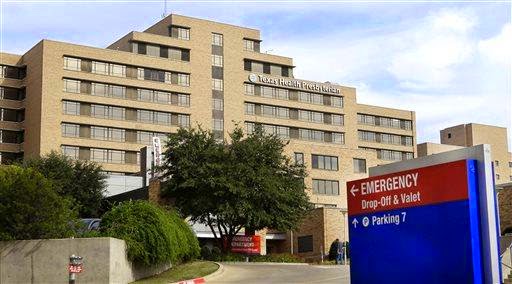
DALLAS — The top administrator in Dallas County rushed to Texas Health Presbyterian Hospital this week responding to urgent news: One of its nurses had caught Ebola from a Liberian patient. He quickly asked for the hospital’s watch list to find out who else might be at risk.

Judge Clay Jenkins, who is overseeing the county’s emergency response, was told there was no such list. Simply put, nurse Nina Pham and her co-workers, who were handing fluids, inserting IVs and cleaning Thomas Eric Duncan in his dying days, were supposed to take their own temperatures and let someone know if they felt sick.

That wasn’t nearly enough for Jenkins, and that evening, he began to make changes. Hospital officials told potentially exposed hospital workers to stop seeing patients other than Pham.

But the next day, the federal Centers for Disease Control and Prevention allowed another nurse who cared for Duncan, Amber Vinson, to get on a plane in Ohio and fly to Dallas with a mild fever. She was later diagnosed with Ebola, and CDC Director Dr. Tom Frieden has conceded that she “should not have traveled on a commercial airline.”

The inconsistent response by health officials in monitoring and limiting the movement of health workers has been one of the critical blunders in the US response to the Ebola outbreak. Friends and family who had contact with Duncan before he was hospitalized were confined to homes under armed guard, but nurses who handled his contagious bodily fluids were allowed to treat other patients, take mass transit and get on airplanes.

“I don’t think the directions provided to people at first were as clear as they needed to be, and there have been changes in the instructions given to people over time,” said US Rep. Michael Burgess of Texas, a doctor who did his residency in Dallas.

Local health authorities have said repeatedly throughout the response that their guidance and direction can change.

“Please keep in mind the contact list is fluid, meaning people may fall off the list or new people may be added to the list depending on new information that could arise at any time on any given day,” said Dallas County health department spokeswoman Erikka Neroes on Friday when asked how many people are even being monitored.

On Thursday, Jenkins announced stricter restrictions that require hospital staffers who had been potentially exposed to stay away from the public for 21 days and check their temperature twice a day, once in person with a public health worker. It was the first written order anyone being monitored has been asked to sign.

“They can walk their dog, but they can’t go to church; they can’t go to schools; they can’t go to shopping centers,” said Mayor Mike Rawlings.

Public health epidemiologists were notifying the health care workers of the directions Friday, said Texas Department of State Health Services spokeswoman Carrie Williams.

But even those medical agreements allow some wiggle room. For example, they say public transit isn’t outright banned but “should be discussed with the public health authority.”

Officials say 125 friends, family, doctors, nurses, technicians, ambulance drivers and others may have been exposed in Dallas inthe days before Duncan died on Oct. 8. Since then, the two nurses have tested positive and at least 18 other people in Texas and Ohio have been identified as secondary contacts who also merit watching.

At first, the monitoring sounded relatively simple: track down the contacts, monitor them with least twice daily temperature records and test people who develop symptoms for Ebola. State officials would be in charge, working with the CDC and Dallas County authorities.

But for a time after Pham was diagnosed with Ebola, different hospital workers had different levels of monitoring, based in part on their exposure risk. Some self-reported their temperatures. Some continued to care for patients. Hospital spokesman Wendell Watson on Saturday referred all questions about the facility’s monitoring practices to county officials.

The county moved Duncan’s girlfriend, Louise Troh, her 13-year-old son, Duncan’s nephew, and a family friend from their apartment to a guarded house in an undisclosed location, where a health official comes by twice a day and takes their temperatures. The unusual confinement order was imposed after the family failed to comply with a request not to leave their apartment, Jenkins said.

Pham and Vinson have been taken to medical centers with isolation units in Maryland and Atlanta. There are four such centers in the US.

At the National Institutes of Health medical center in Bethesda, Maryland, spokeswoman Amanda Fine says staff involved in caring for people with Ebola are given thermometers and instructions and must measure and submit body temperatures twice daily.

Taylor Wilson, a spokesman for the Nebraska isolation unit, which has also been treating Ebola patients, said that every time health care workers go into the unit, they must stop and take their temperature and other vital signs and log the results. They are also advised to keep an eye out for any symptoms.

He said that there are no restrictions on the staff’s movements outside of work.

source: newsinfo.inquirer.net

Wednesday, October 15, 2014

Second health worker in Texas tests positive for Ebola


WASHINGTON — A second health worker at the Texas hospital where the first case of Ebola contamination on US soil occurred has tested positive for the disease, the state government said Wednesday.

Like the first case, the second concerned a caregiver who treated a Liberian Ebola sufferer who later died at the Dallas hospital, the Texas Department of State Health Services said.

The second worker came down with a fever on Tuesday and was isolated at the hospital right away.


“Health officials have interviewed the latest patient to quickly identify any contacts or potential exposures, and those people will be monitored,” the health department said in a statement.

The Centers for Disease and Prevention said the second worker’s positive test came from a preliminary analysis conducted overnight and the CDC is carrying out its own test to confirm the result.

“As we have said before, because of our ongoing investigation, it is not unexpected that there would be additional exposures,” it said in a statement.

Both of the health workers had cared for Ebola sufferer Thomas Eric Duncan, who is thought to have contracted the disease while still in Liberia, and who died on October 8.

The CDC noted it is taking a series of new measures to boost hospitals’ preparedness, including sending to Dallas experts who have managed to control Ebola outbreaks in Africa over the past two decades.

The center said it is improving procedures to protect health care workers at the Dallas hospital, and providing health workers there and elsewhere with opportunities for more training.

source: newsinfo.inquirer.net

Thursday, October 9, 2014

Spain euthanizes pet dog of Ebola-infected woman


MADRID—The protesters, chanting “Assassins!” as they scuffled with police in front of a suburban Madrid apartment complex, made their demand clear: No matter how desperate officials might be to stop the spread of Ebola, an innocent pet must not be made a casualty.

By nightfall Wednesday, that campaign to save one family’s dog had turned in to a global outcry when the protest detonated online, generating hundreds of thousands of petition signatures and more social networking mentions than teen idol Justin Bieber. In the end, though, it did no good — Spanish health officials announced the pet had been  euthanized  and its body incinerated.

The brief but intense battle over the life of Excalibur, a light brown mixed breed belonging to a Spanish nursing assistant and her husband, began soon after the woman was diagnosed with the deadly virus Monday, contracted when she treated a victim who came from Sierra Leone.

Officials from Madrid’s regional government got a court order Tuesday to  euthanize  the pet, despite uncertainty over whether the dog was also infected or risked spreading the disease to humans. By that afternoon, 30 to 40 animal rights activists had taken up positions outside nursing assistant Teresa Romero’s apartment complex, determined to prevent officials from entering.

Then Romero’s quarantined husband, Javier, recruited a veterinarian who hosts a popular radio talk show in a bid to spare his dog’s life.

“I’m in the hospital and I’m making a call to all people to help me save my dog Excalibur because they want to kill him just like that, without following any procedure,” Javier Romero said in a video appeal from his hospital room. Within hours, the cause went viral.

On Twitter, the hashtag #SalvemosaExcalibur — “Let’s Save Excalibur” — was tweeted nearly 400,000 times in 24 hours, making it the social networking site’s second most popular meme worldwide. That outpaced new mentions of Bieber, and was second only to a hashtag drawing attention to a Syrian village on the border with Turkey under attack from the Islamic State militant group.

“We need to save Excalibur’s life!!,” a person self-identified as Massiel Ayleen tweeted. “Spain save him don’t sacrifice him, he deserves treatment.”

In an equally short time, a petition set up on the Change.org website demanding the dog’s life be saved garnered more than 380,000 signatures, and a second petition gathered 70,000 more.

At Romero’s apartment complex, the dog was seen pacing the balcony Wednesday. Police pulled away activists who blocked the road Wednesday when firefighters and workers in white hazardous materials suits tried to entered the complex.

But after refusing the say when the dog would be taken away, the Madrid regional government announced Wednesday evening that it had  euthanized  the pet.

Excalibur was “sedated beforehand to avoid suffering,” Madrid’s regional health agency said in a statement.

The corpse was then “put into a sealed biosecurity device and transferred for incineration at an authorized disposal facility,” the statement said.

The health agency said that the dog was killed because it posed a risk of transmitting the disease to humans.

There is no documented case of Ebola spreading to people from dogs. But at least one major study suggests dogs can get the disease without showing symptoms. Experts say they are uncertain of what risk that poses to humans. Spanish authorities, though, were taking no chances.

When the white veterinary van carrying Excalibur’s body left the apartment complex Wednesday, black plastic covered the outside of the windows. Dozens of protesters stood in front of it and forced it to stop, briefly. Then baton-wielding police officers beat back the crowd and the van drove away.

source: newsinfo.inquirer.net

Monday, August 4, 2014

Why isn’t there a treatment or vaccine for Ebola?


LONDON — In the four decades since the Ebola virus was first identified in Africa, treatment hasn’t changed much. There are no licensed drugs or vaccines for the deadly disease.

Some are being developed, but none have been rigorously tested in humans. One experimental treatment, though, was tried this week in an American aid worker sick with Ebola, according to the U.S-based group that she works for in Liberia.

Without a specific treatment, doctors and nurses focus on easing the disease’s symptoms — fever, headache, vomiting and diarrhea — and on keeping patients hydrated and comfortable.

The outbreak in three West African countries — Liberia, Guinea and Sierra Leone — has sickened more than 1,300 people and more than 700 have died since March.

WHY ISN’T THERE A TREATMENT BY NOW?

For one thing, the Ebola virus is hard to work with. The virus doesn’t grow well in petri dishes and experiments can only be done in the relatively few labs with the highest security measures.

And while Ebola is lethal, it’s rare. Outbreaks are unpredictable, giving doctors few chances to test new treatments. While the current epidemic is the largest recorded, the number of people sickened by Ebola is small compared to the number killed by other diseases like malaria or dengue. Much of the funding for Ebola research is from governments that worry about the virus being used in a bioterror attack.

“It’s not economically viable for any company to do this kind of research because they have stockholders to think about,” said Ben Neuman, a virologist at the University of Reading in Britain.

WHAT’S IN THE PIPELINE?

There are about a half dozen Ebola drugs and vaccines in development, several of which have received funding from the U.S. One drug developed by the U.S. Army has shown promising results when tested in monkeys.

“We think this may work because of the animal models but until you do the studies in humans, you just don’t know,” said Fred Hayden, an infectious diseases specialist at the University of Virginia, who was not involved in the research.

While animal studies for vaccine candidates have been encouraging, it’s unclear what dose humans would need.

A Canadian company, Tekmira, has a $140 million contract with the U.S. government to develop a Ebola vaccine. An early test of the shot in healthy humans was stopped recently after the Food and Drug Administration asked for more safety information.

SHOULD EXPERIMENTAL DRUGS BE USED NOW?

Scientists are split on whether or not it is a good idea to try experimental drugs and vaccines before they are approved but the prospect is being informally discussed.

“Given the prolonged and unprecedented nature of the epidemic, we need to carefully consider this,” said Dr. Peter Piot, the co-discoverer of Ebola in 1976 and director of the London School of Hygiene and Tropical Medicine.

The World Health Organization has no plans to facilitate any clinical trials during this outbreak, spokesman Gregory Hartl said.

Other experts say it’s unethical to use treatments or vaccines that haven’t been properly tested, and warn the results could be disastrous.

“None of these drugs or vaccines are ready to be used in humans from a legal point of view,” said Dr. Heinz Feldmann, chief of virology at the U.S. National Institute of Allergy and Infectious Diseases.

It would be impossible to vaccinate or treat everyone in the region but if any tests do proceed, they would probably be focused on those at highest risk: health care workers.

The American woman who got the experimental drug in Liberia worked at a hospital where Ebola patients were treated. It’s not known what kind of treatment she received.

If health care workers are treated, “We will have to explain why some people are getting the vaccine and others are not,” Feldmann said, adding there are still vast areas of West African communities suspicious of Western aid workers and their treatments. “At the moment, it doesn’t even look like the local population wants it.”

source: newsinfo.inquirer.net

US missionary with Ebola leaving Liberia Tuesday


ATLANTA  — A second American missionary stricken with Ebola is expected to fly Tuesday to the US for treatment, following a colleague who was admitted over the weekend to Emory University Hospital’s infectious disease unit.

A Liberian official confirmed to The Associated Press plans for Nancy Writebol to depart with a medical evacuation team. The official, Information Minister Lewis Brown, said the evacuation flight was scheduled to leave West Africa between 1 a.m. and 1.30 a.m. local time Tuesday.

Writebol’s son, Jeremy Writebol, said his mother “is still struggling” but that “there seems to be improvement” and that the family is optimistic she will recover amid a spreading Ebola outbreak that has killed at least 729 people in Liberia, Guinea and Sierra Leone.

The Writebols’ mission team partner, Dr. Kent Brantly, also was improving Sunday after he was admitted to Emory’s quarantine unit a day earlier, according to a statement from his wife.

“Our family is rejoicing over Kent’s safe arrival, and we are confident that he is receiving the very best care,” Amber Brantly said, adding that she was able to see her husband Sunday.

Brantly and Nancy Writebol served on the same mission team treating Ebola victims when they contracted the virus themselves. Brantly was serving as a physician in the hospital compound near Monrovia, Liberia, when he became infected. Writebol worked as a hygienist whose role included decontaminating those entering or leaving the Ebola treatment area at that hospital.

There is no cure for Ebola, which causes hemorrhagic fever that kills at least 60 percent of the people it infects in Africa. Ebola spreads through close contact with bodily fluids and blood, meaning it is not spread as easily as airborne influenza or the common cold. Africa’s under-developed health care system and inadequate infection controls make it easier for the Ebola virus to spread and harder to treat.

Any modern hospital using standard infection-control measures should be able to handle it, and Emory’s infectious disease unit is one of about four in the U.S. that is specially equipped to test and treat people exposed to the most dangerous viruses.

Patients are quarantined, sealed off from anyone who is not in protective gear. Lab tests are conducted inside the unit, ensuring that viruses don’t leave the quarantined area. Family members can see and communicate with patients only through barriers.

Brantly arrived Saturday under stringent protocols, flying from West Africa to Dobbins Air Reserve base outside Atlanta in a small plane equipped to contain infectious diseases. A small police escort followed his ambulance to Emory, where he emerged dressed head to toe in white protective clothing and walked into the hospital on his own power.

A physician from Texas, Brantly is a Samaritan’s Purse missionary. The Writebols are working through SIM USA. The two Christian organizations have partnered to provide health care in West Africa.

The Rev. John Munro, the Writebols’ pastor at Calvary Church in Charlotte, North Carolina, described the couple as “quiet, unassuming people” who felt called by God” to go overseas 15 years ago.

Jeremy Writebol said his parents spent five years in Ecuador and nine years in Zambia before going to Liberia last August.

Munro added, “They take the Great Commission literally,” a reference to the scriptural instruction from Jesus Christ to “make disciples of all nations.”

Munro, whose church sponsors the Writebols’ mission work, recalled speaking with the couple when the Ebola outbreak began. “We weren’t telling them to come back; we were just willing to help them come back,” he said. “They said, ‘The work isn’t finished, and it must continue.’”

The outbreak comes as nearly 50 African heads of state come to Washington, D.C., for the U.S.-Africa Leaders Summit — billed as a tool for African nations to integrate more into the world economy and community. With the outbreak, however, the presidents of Liberia and Sierra Leone have scrapped their plans to attend the three-day summit opening Monday.

Meanwhile, some airlines that serve West Africa have suspended flights, while international groups, including the Peace Corps, have evacuated some or all of their representatives in the region.

In the United States, public health officials continue to emphasize that treating Brantly and Writebol in the U.S. poses no risks to the public here.

“We know how to control it: hospital infection control and stopping it at the source in Africa,” Dr. Tom Frieden, director of the U.S. Centers for Disease Control and Prevention, said, speaking Sunday on ABC’s “This Week.”

Frieden’s agency is ramping up its effort to combat the outbreak. He promised “50 staff on the ground” in Liberia, Guinea and Sierra Leone “in the next 30 days.”

source: newsinfo.inquirer.net